 guido
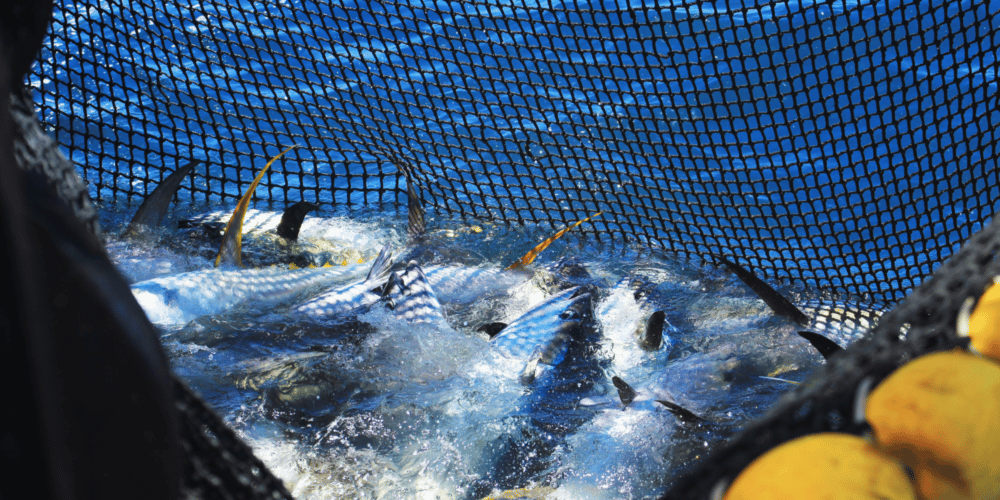
guido The UN Food and Agriculture Organization estimates that around 90 million tonnes of fish are taken from the oceans every year, and the growing demand for omega-3 pushes that number further. According to WWF, nearly a third of assessed fish stocks are overfished, and another 60% are fished to their limit. Time to take responsibility for our oceans.
What overfishing does to the ocean
Overfishing simply means more fish are caught than can replenish. Sustained long enough, species can disappear locally. On top of that comes bycatch: the unintended catching of other fish and marine animals. According to the FAO, roughly a third of the total catch never reaches a plate. That costs billions of fish and hundreds of thousands of other sea animals their lives every year.
The consequences reach beyond the fish themselves: the entire food web tips out of balance, threatened species such as sea turtles and corals come under pressure, and with them the health of the ocean we all depend on, including for a large share of the oxygen on Earth.
A quarter of the catch goes to the omega-3 industry
And here it becomes personal: a substantial share of the global catch is destined for fishmeal and fish oil, including omega-3 supplements. That is precisely the unnecessary part. Fish do not produce their omega-3; they obtain DHA and EPA by eating algae. The fish is merely the middleman.
FISH-FREE
The same fatty acids, straight from the source
Since 2008 we have worked with microalgae, the original source of omega-3. Our algae grow on land in closed, sterile tanks: no fishing, no bycatch, and no ocean contaminants in the end product. The DHA and EPA are identical to those from fish oil. At 250 mg daily, EPA and DHA contribute to normal heart function, and DHA contributes to the maintenance of normal brain function and normal vision. Curious how it works? See our production process.
What can you do?
- Choose an omega-3 supplement from algae oil instead of fish or krill oil
- Eat less or no fish; every avoided portion lowers demand
- Spread the word: few people know omega-3 is plant-based in origin
Omega-3 without a single fish
One capsule of Testa Omega-3 daily: over 450 mg of DHA and EPA from land-grown algae.
Good for you. Good for the ocean.
Figures: FAO (annual catch and bycatch) and WWF (stock status). Authorised health claims (EFSA) at a daily intake of 250 mg: EPA and DHA contribute to normal heart function; DHA contributes to the maintenance of normal brain function and normal vision.