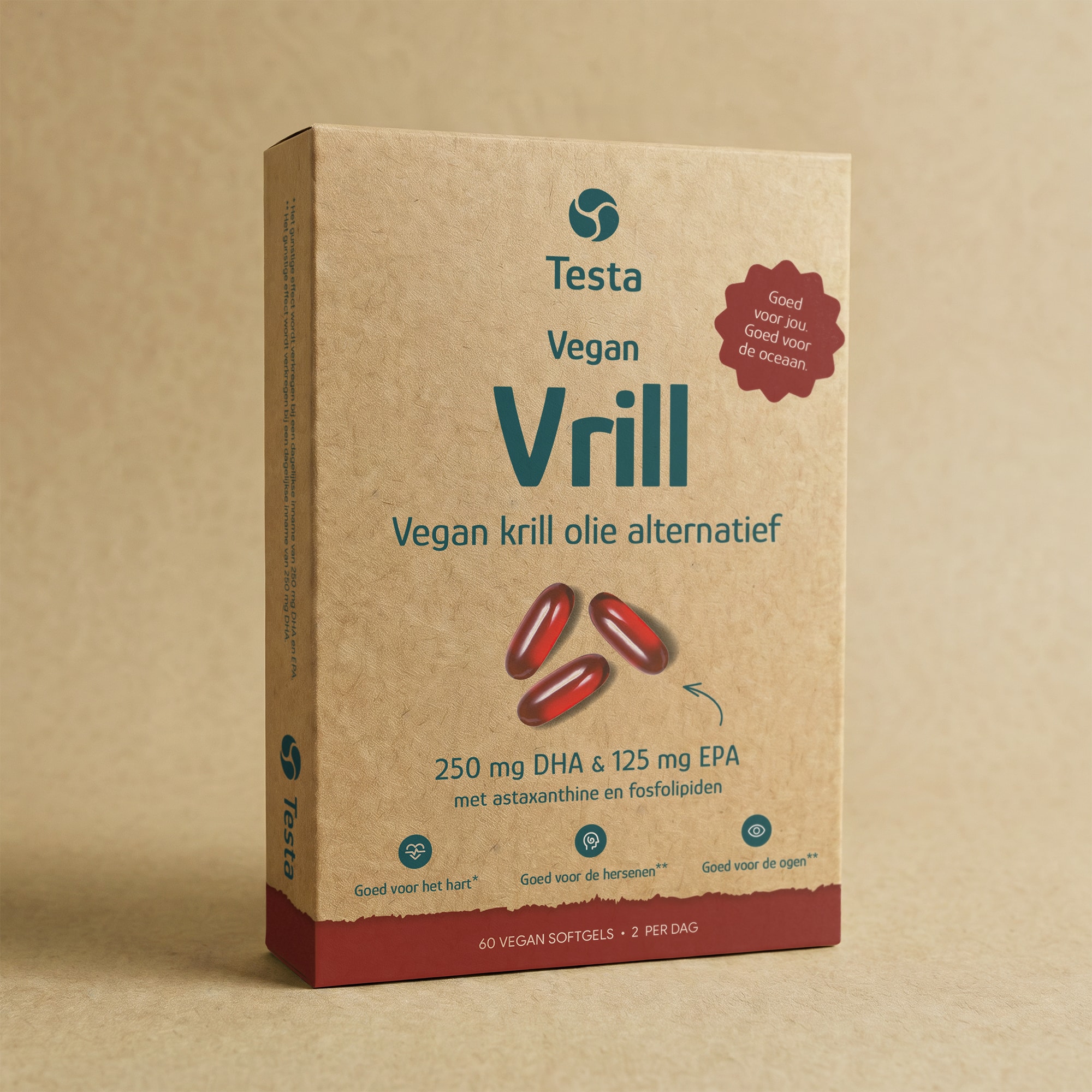
Why choose Testa Omega-3?
Straight from the source
Testa Omega-3 extracts EPA and DHA directly from microalgae: the original source of these omega-3 fatty acids. No unnecessary detour via fish.

100% fishfree
Our Omega-3 comes from algae, not fish. This means you can choose EPA and DHA without the need for fish as a raw material.
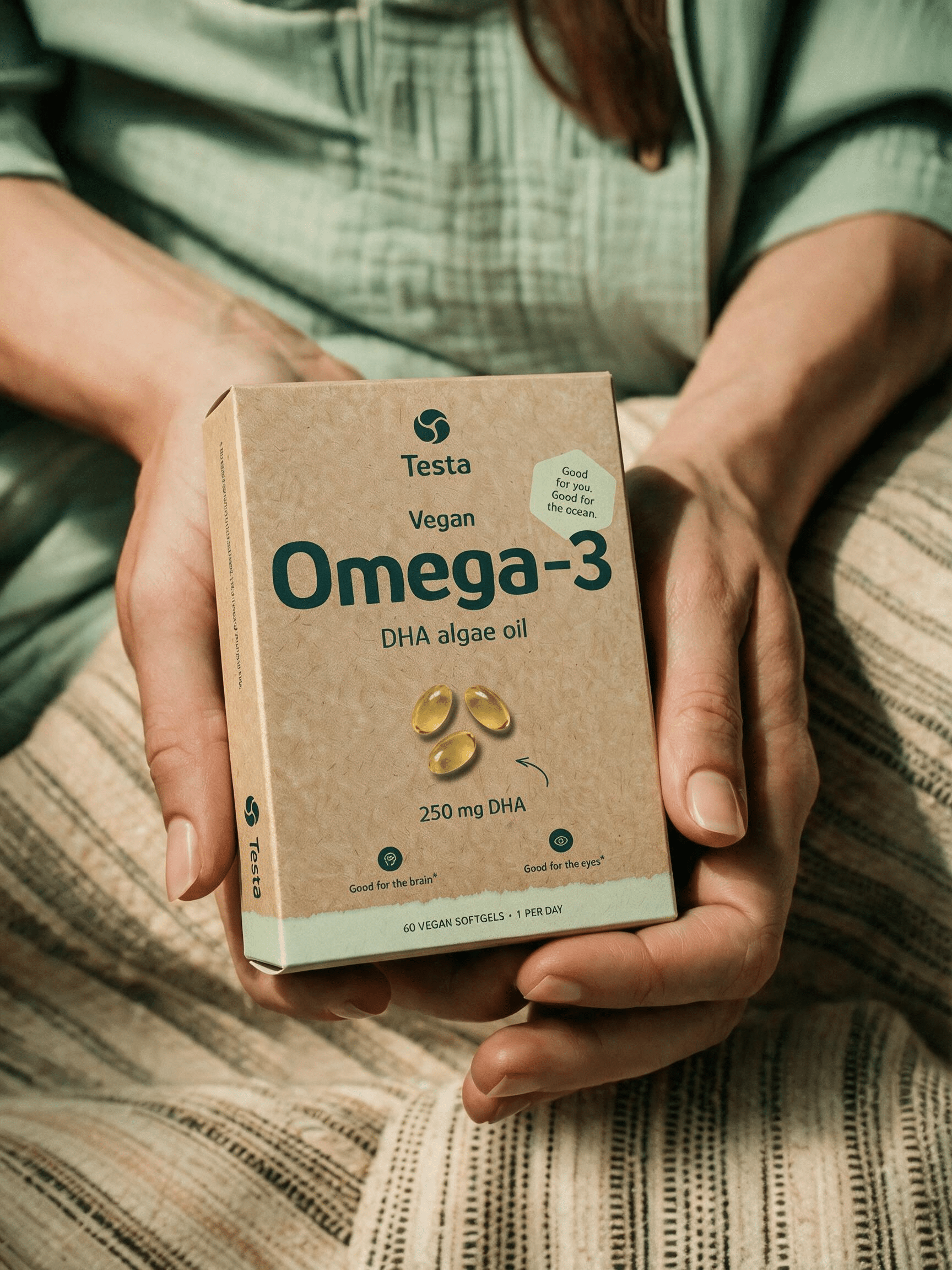
485 mg of omega-3 per capsule
Testa DHA and EPA capsules contain 485 mg, which is 20 per cent more omega-3 than standard algae oil capsules.

Frequently asked questions
DHA, EPA and DPA are essential Omega-3 fatty acids that are traditionally taken from fish. That is not necessary at all, because fish get these fatty acids by eating algae. Testa vegan DHA EPA contains the purest essential fatty acids, because our vegan Omega-3 supplements come straight from algae grown sustainably on land. u003cbru003eTesta DHA & EPA is a complete Omega-3 product, ideal for supporting overall health. It is also sugar-free, allergen-free, non-GMO and contains no harmful substances from the ocean.
Ingredients
Algae oil (Schizochytrium sp.), sunflower lecithin, sunflower oil, vegan softgel (hydroxypropyl starch, glycerol, sorbitol, carrageenan, purified water), astaxanthin.
Nutritional information
The recommended daily dose (2 softgels) contains:
Omega-3 fatty acids (from algae oil)
- of which DHA (docosahexaenoic acid): 250 mg
- of which EPA (eicosapentaenoic acid): 125 mg
- Astaxanthin: 1500 µg
- Phosphatidylcholine: >230 mg
Directions for use
Algae oil (Schizochytrium sp.), vegan softgel (hydroxypropyl starch, glycerol, carrageenan, purified water), high oleic sunflower oil and d-alpha-tocopherol.
Which one suits you?
Compare and choose easily
All Testa products are 100% plant-based and
sustainably produced
sustainably produced
Best for the brain 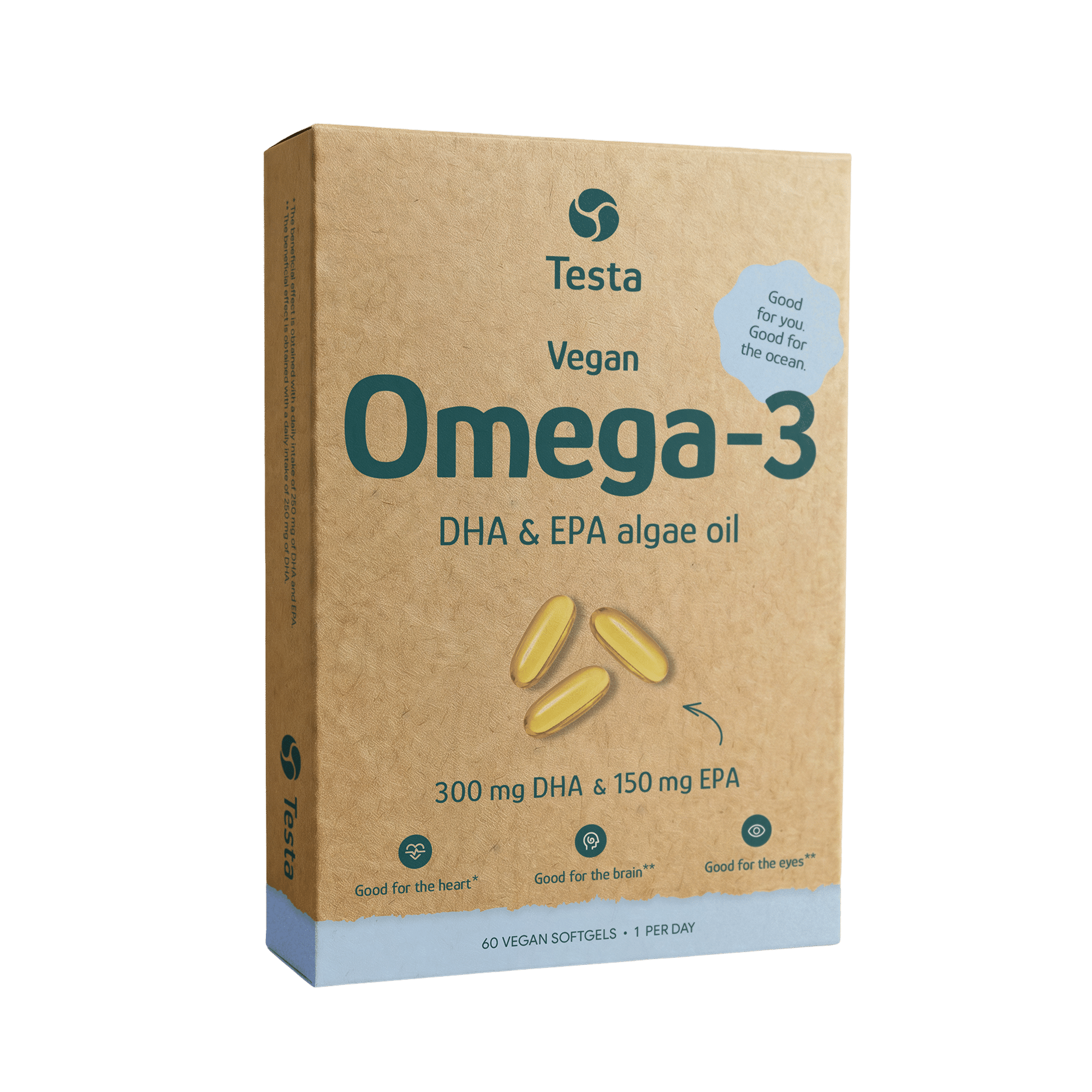 DHA & EPA Improves your focus & heart health DHA & EPA Improves your focus & heart health | 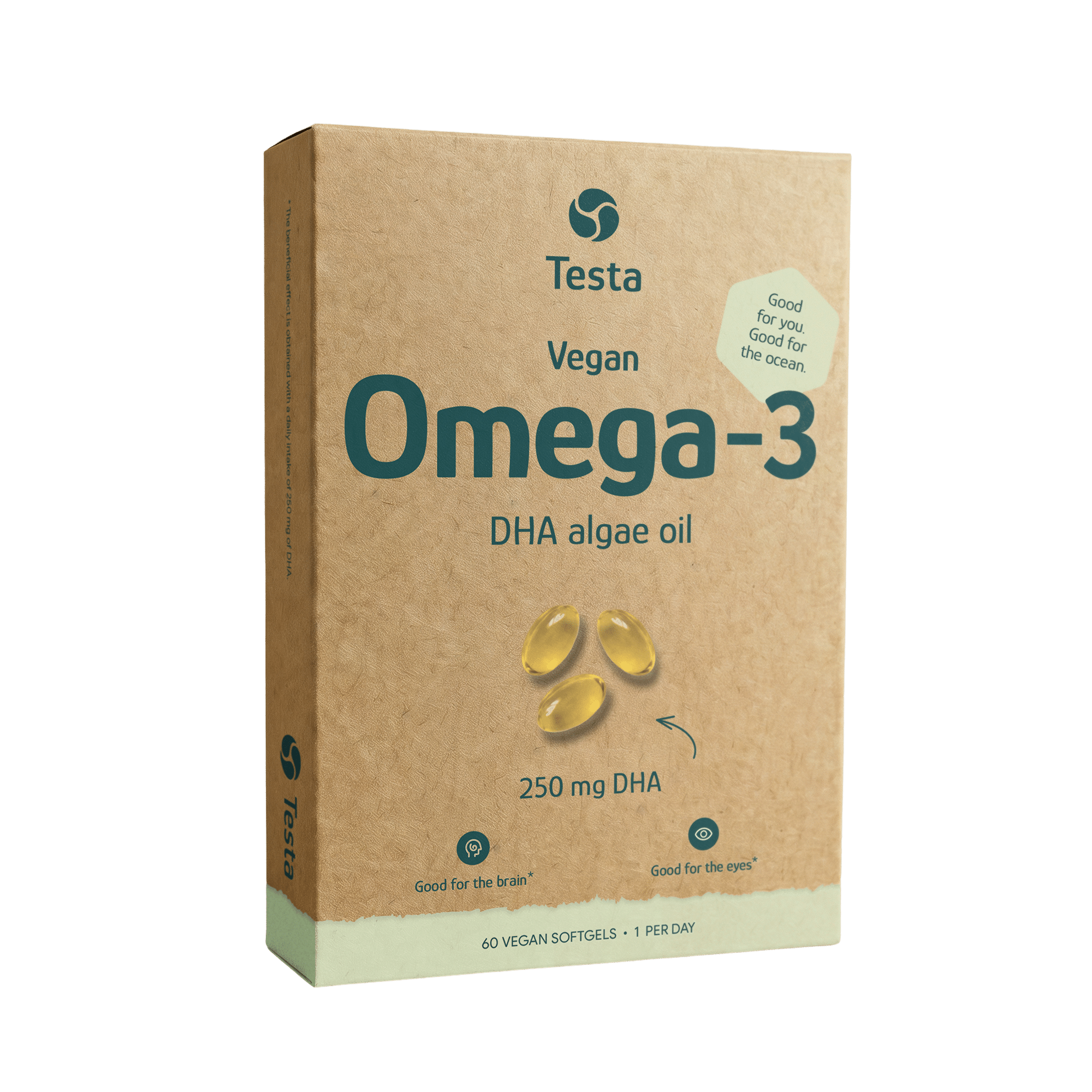 DHA For all-round health DHA For all-round health | 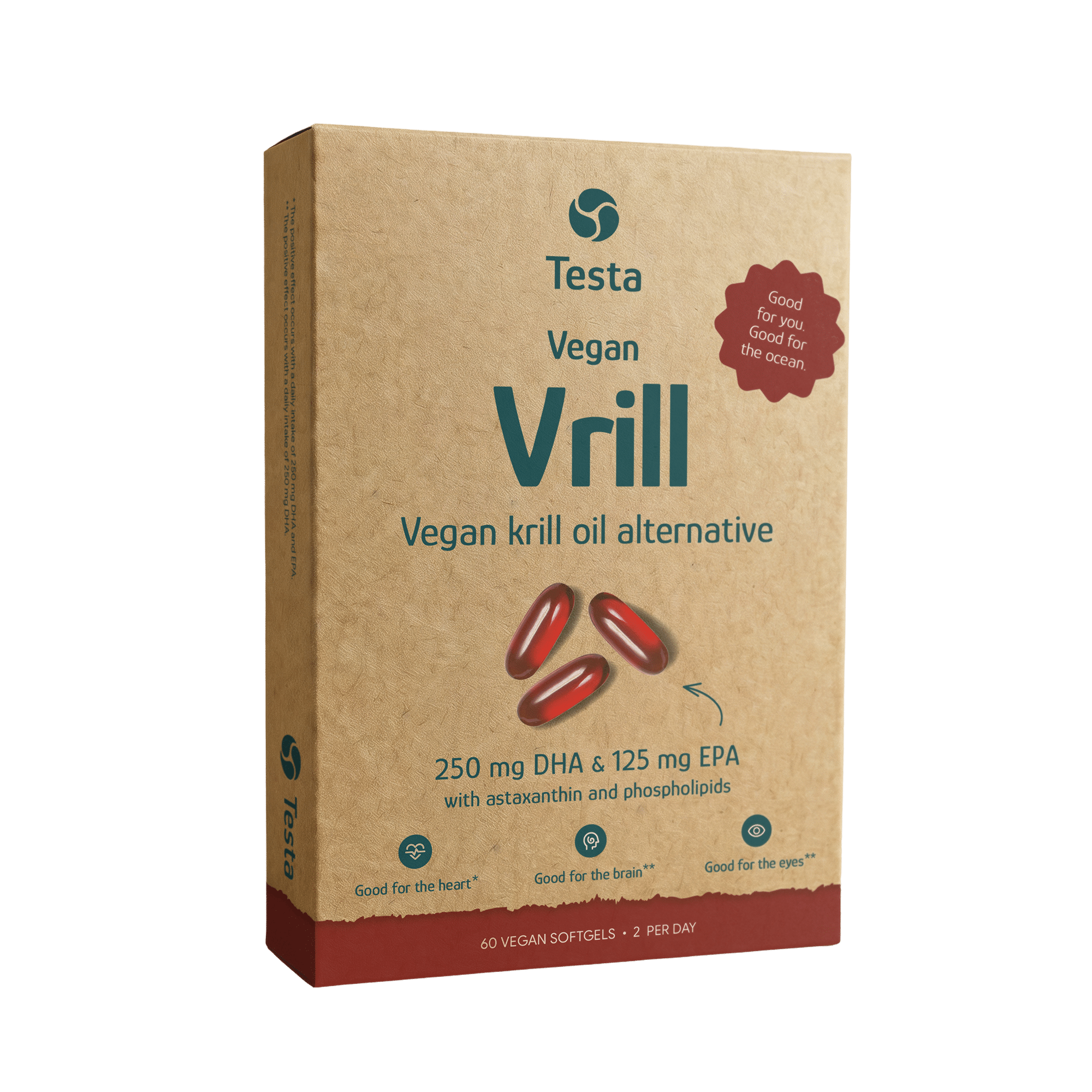 Vrill For sport & recovery Vrill For sport & recovery | |
|---|---|---|---|
| Key ingredients | DHA EPA | DHA | DHA EPA KRILL |
| Health benefits | Heart, brain & eyes | Brain & eyes | Heart, brain & antioxidant |
| Ideal for | All-round support for body and mind | Focused on concentration and brain function | Extra support for recovery and an active lifestyle |
| Dosage & packaging | 1 capsule per day 120 capsules | 1 capsule per day 60 capsules | 2 capsules per day 120 capsules |
| Replaces | Fish oil | DHA fish oil | Krill oil |
| Vegan |  | | |
| From €9,33 per month Order now | From €5,08 per month Order now | From €18,66 per month Order now |
Still unsure?
Try Testa Omega-3
for just €7,50
Still unsure? That is why we put together a trial pack. It lets you try Testa Omega-3 for two weeks and judge for yourself.

100% plant-based from algae
Good for heart, brain & eyes
Certified ‘Plastic Negative’